Edition and research date: October 26, 2026 News window: October 19–25, 2026
From Arizona paving crews to Texas data-center permitting, this week’s developments point to a practical lesson: a project pipeline is only useful when you know what is authorized, funded and ready to build. Here are five developments worth your attention, followed by project leads, equipment updates and one field practice to use this week.
01 / THE BIG BUILDS
Opportunity labels matter: active construction is work underway; proposed authorization is pending. Suggested trade scopes are prospecting leads, not confirmed bid invitations.
Arizona’s I-10 widening moves into paving north of Casa Grande
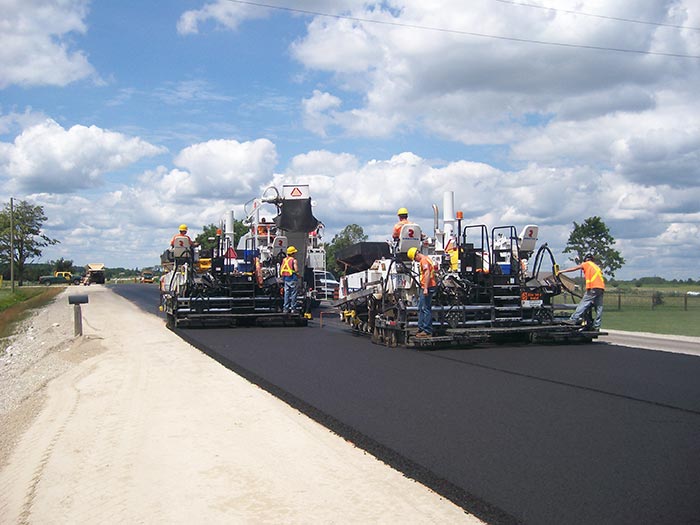
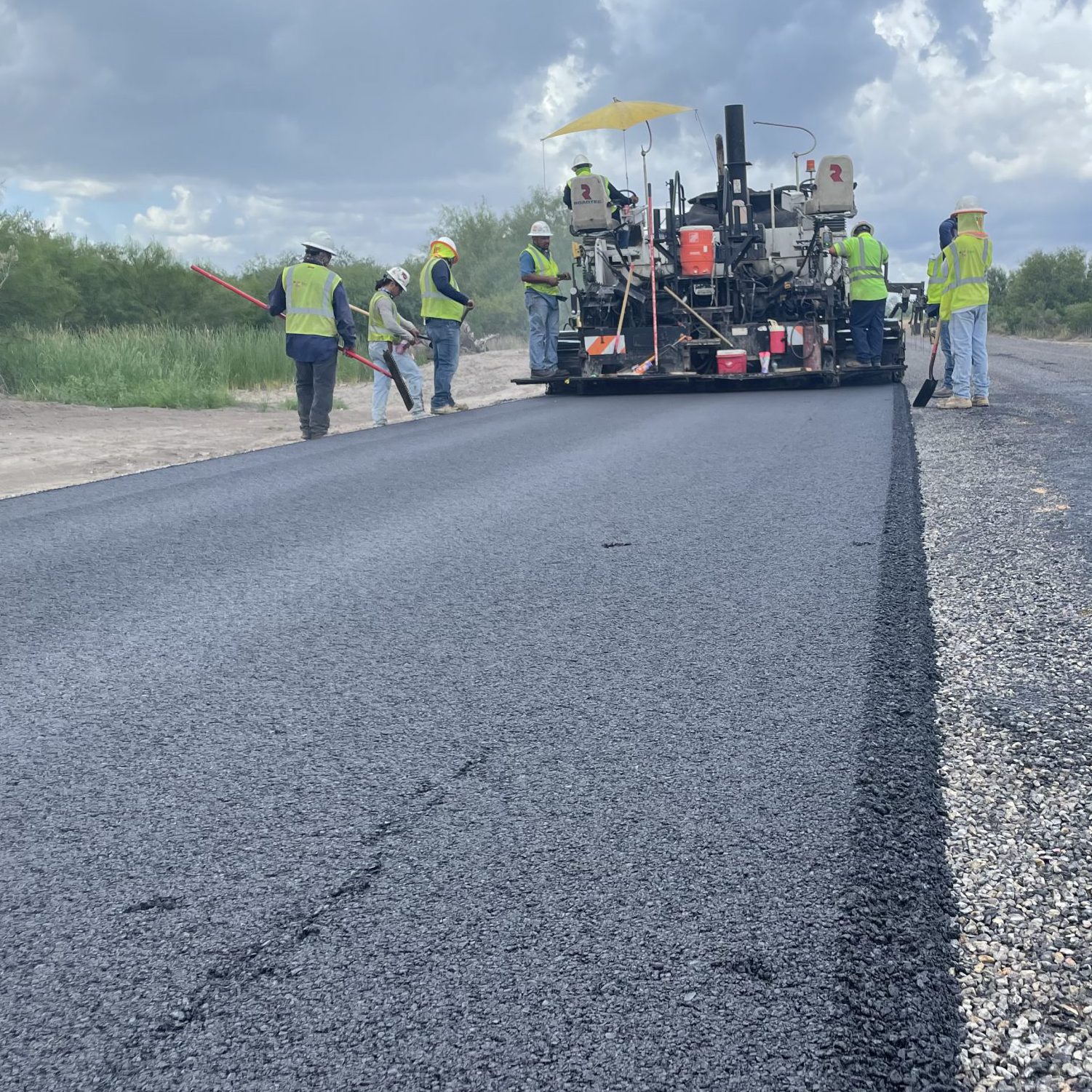
Asphalt paving crew. Context photograph from Cox Construction; not the I-10 Wild Horse Pass project. Image source ↗
ADOT reported that crews have begun paving additional lanes on the I-10 Wild Horse Pass Corridor. Its October 22 update identifies paving in the Gas Line Road–south of SR 387 segment, alongside interchange, bridge and freeway technology work. The overall corridor program covers 26 miles and is expected to finish in late 2029.
For field leaders, the milestone brings attention to interfaces between paving, structures and traffic systems. Use the owner’s current traffic-control plans and work notices when coordinating deliveries and adjacent operations. This is progress on an active program; it is not a newly advertised prime contract.
Location: Between Phoenix and Casa Grande, Arizona. Organization: Arizona Department of Transportation.
Project lead — active construction - Location / owner: Phoenix–Casa Grande corridor, Arizona; ADOT. - Verified milestone: October 22 paving update described above. - Value / general contractor: Not verified in the weekly update reviewed. - Schedule: The identified segment began active construction in January 2026; corridor completion is expected in late 2029. - Potential supplier or subcontractor leads: Paving support, traffic control and intelligent transportation systems; confirm remaining packages with the project team.
Location: Phoenix–Casa Grande corridor, Arizona Investment: Not verified in the weekly owner update Project type: I-10 widening — active construction Timeline: Segment began January 2026; corridor completion expected late 2029 Contractors: Owner: ADOT; prime contractor and remaining packages not verified
Why it matters: Multi-year highway work creates sustained coordination demands across civil and electrical scopes.
San Diego emergency repairs — proposed contract increases
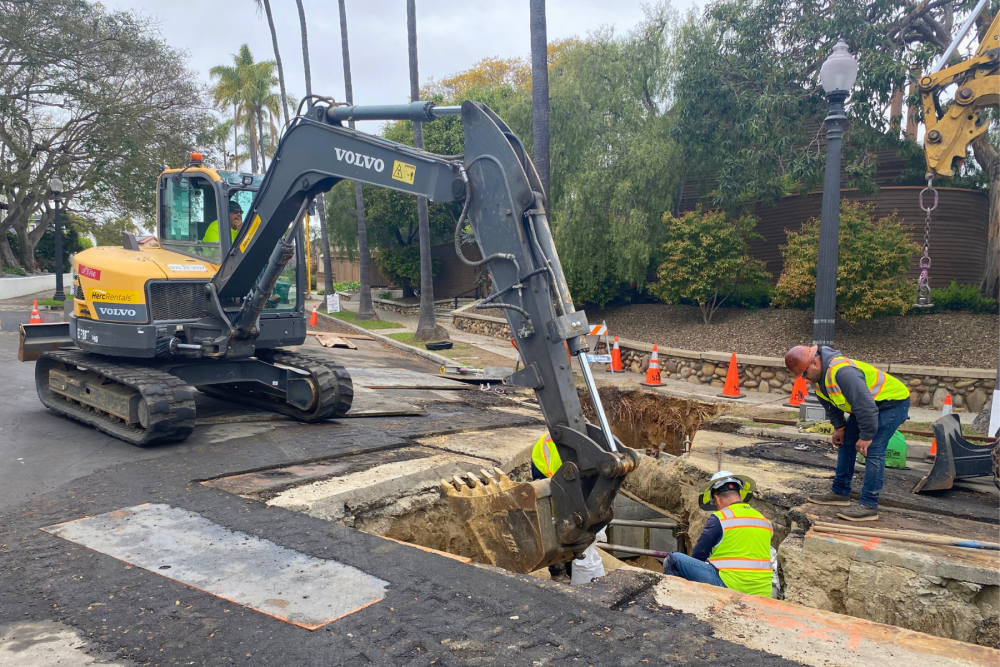
Earlier Mission Hills stormwater work, 2025. Credit: City of San Diego / Inside San Diego. Context only; not the contracts discussed here. Image source ↗
The city’s October 20 committee preview proposed increasing the Civic Center Parkade emergency repair contract with TC Construction to $2.71 million, and an emergency storm-drain repair contract with CASS ARRIETA to $8.086 million. These are proposed revised contract ceilings, not the value of new open bids.
- Location / owner: Downtown and Uptown San Diego, California; City of San Diego. - Status: Requests scheduled for the October 22 committee meeting. Final approval and execution were not verified. - Start / completion: Not established in the reviewed preview. - Potential opportunities: Ask the named contractors about remaining concrete-repair or underground utility needs after checking approval and scope. No open subcontract package was verified.
Location: Downtown and Uptown San Diego, California Investment: Proposed revised ceilings: $2.71 million and $8.086 million Project type: Emergency concrete and storm-drain repairs — proposed contract increases Timeline: October 22 committee requests; final approval and execution unverified Contractors: TC Construction; CASS ARRIETA
Why it matters: Check final authorization and remaining scope with the named contractors before pursuing subcontract work.
New tracker highlights Western public-land data-center proposals
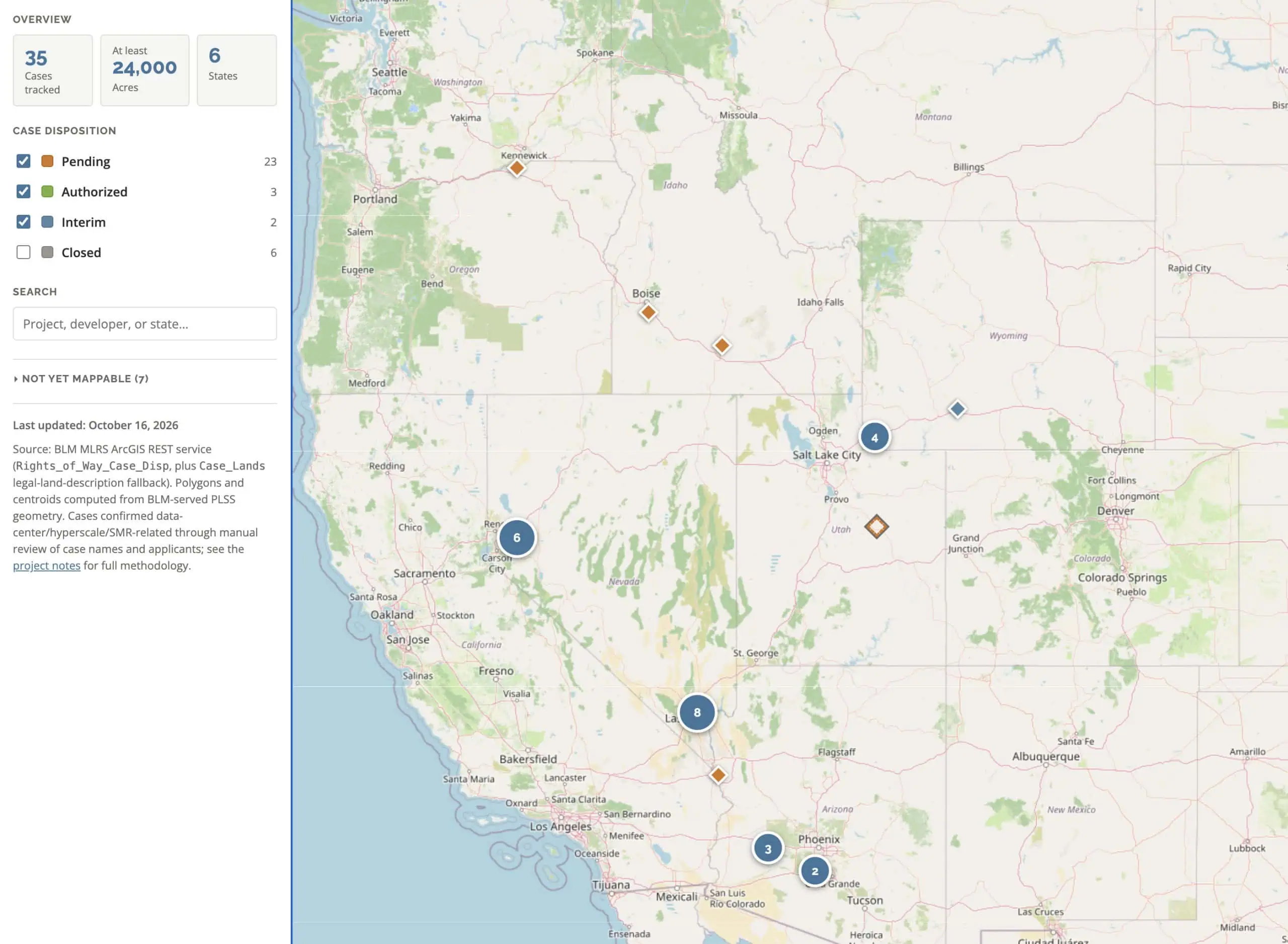
Center for Western Priorities tracker, October 16 data snapshot. Application records and displayed case statuses do not establish construction readiness. Image source ↗
The Center for Western Priorities released a tracker identifying 35 active data-center-related applications across six Western states, including Nevada, Arizona and Utah. Its October 20 release says the underlying federal land records were last refreshed October 16. The organization classifies 17 applications as apparent campus proposals, 13 as likely supporting infrastructure and five as unclassified.
These are application records, and multiple records can belong to one development. For contractors, the tracker is an early prospecting tool: investigate access roads, water, transmission and telecom needs, then verify each case with BLM and the developer before committing estimating resources.
Location: Arizona, Idaho, Nevada, Oregon, Utah and Wyoming. Organizations: BLM, prospective developers and Center for Western Priorities.
This is an advocacy organization’s analysis of government records, not a BLM-approved project list.
Location: Arizona, Idaho, Nevada, Oregon, Utah and Wyoming Investment: Not established by the application records Project type: Data-center and supporting-infrastructure applications Timeline: October 16 data snapshot; construction schedules not verified Contractors: Prospective developers; construction contractors not verified
Why it matters: Remote infrastructure could create substantial enabling work, but neither acreage nor application counts establish funded construction.
Procore AI Go puts voice queries into an open beta
Procore Assist graphic from its June 2025 product update. Related AI context; not a screenshot of the new AI Go mobile app. Credit: Procore. Image source ↗
Procore announced AI Go on October 21, describing a mobile app that answers spoken questions using project information stored in Procore. The intended users include superintendents and crews who need to find information in drawings and specifications.
Availability: Open beta, according to Procore. Pricing / adoption: No verified price or adoption count is included here. Practical evaluation: Test it against known questions and current document revisions. Treat answers as a retrieval aid; confirm the governing document before directing work. Published time-saving claims have not been independently validated for this newsletter.
Why it matters: Test known questions against current document revisions before directing field work.
Yanmar ViO35-7 and SmartAssist Remote. Manufacturer promotional image from the October 22 announcement. Credit: Yanmar. Image source ↗
Yanmar announced an enhanced North American telematics platform for location, utilization, machine health and maintenance tracking. Fleet managers and equipment supervisors could use that information to plan service and investigate idle or misplaced assets.
Availability: Beginning October 22, according to the manufacturer; eligible existing connected machines can transition. Commercial terms: Five years of service included on eligible new equipment; no verified dollar price. Limitations: Confirm machine eligibility, connectivity, renewal charges and integration requirements. Remote-project buyers should test coverage on their actual sites. The announcement establishes features and terms, not independently measured reductions in downtime.
Buyers considering eligible Yanmar equipment can ask dealers to document the included SmartAssist service and later renewal costs. This is a published service term, not a verified equipment discount.
No acquisition, financing promotion or grant application was sufficiently verified for inclusion this week.
Why it matters: Confirm machine eligibility, jobsite connectivity and renewal costs before relying on the service.
EarthCam announces additional visual-data integration with Procore
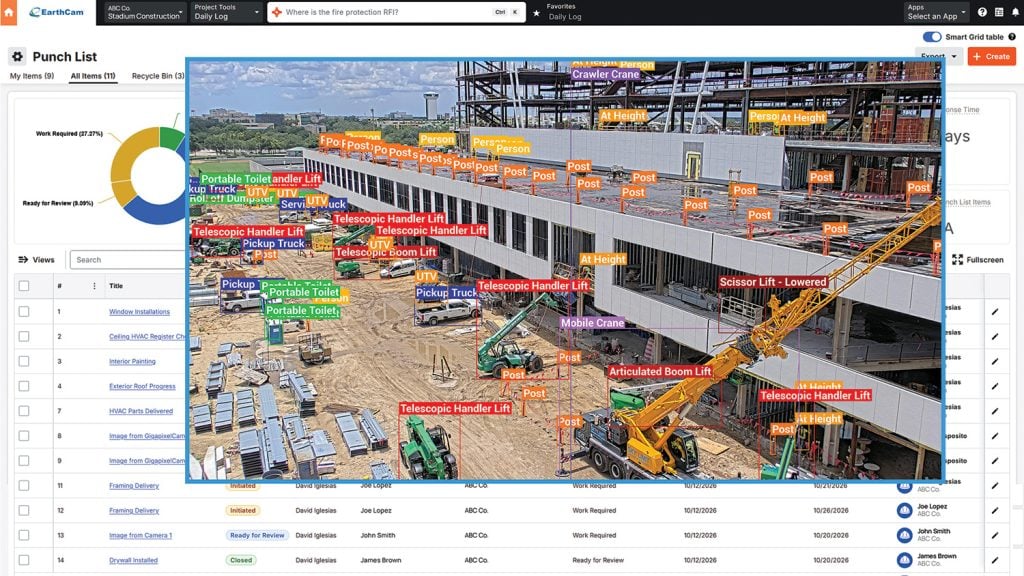
EarthCam’s demonstration of visual detections within Procore. Vendor promotional screenshot; not an independent accuracy test. Credit: EarthCam. Image source ↗
EarthCam premiered the tenth generation of its Procore integration on October 21. It describes sharing camera imagery and detection metadata, including equipment counts and jobsite conditions, into project workflows. Remote managers and site teams could use such records to investigate deliveries or reconcile daily reporting.
Availability: Announced and demonstrated; general deployment timing and customer eligibility were not established in the material reviewed. Pricing / adoption: Not verified. Limitations: Ask for a site-specific demonstration, integration scope and written pricing. Camera views and automated detections require human interpretation; do not use them as the sole basis for safety enforcement or payment decisions. Claimed administrative savings remain vendor claims.
Why it matters: Evaluate camera coverage and detection accuracy on the actual site; retain human review.
Put a release-to-work check into the weekly look-ahead
Clear handoffs start with a shared plan. AI-generated editorial illustration.
Before a crew mobilizes to a new area, have the responsible supervisor confirm five things: authorized work limits, current drawings, material readiness, access and the handoff from the preceding trade. Record the owner of each unresolved item and when a decision is needed.
Why it matters: Keep unreleased work visible and assign a ready alternative before the crew arrives.
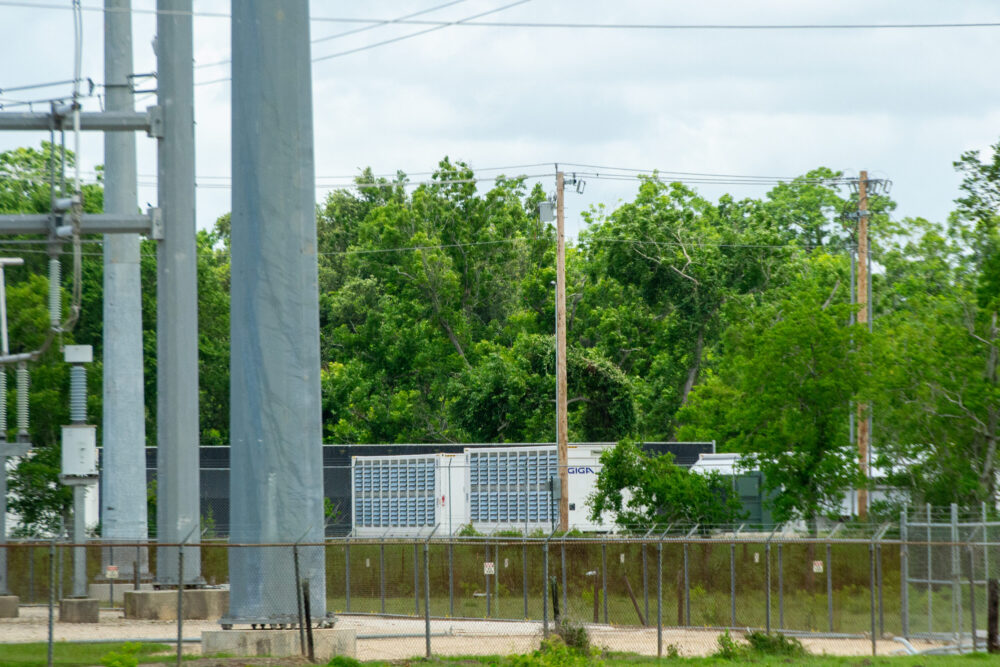
Data-center equipment near Brazoria, Texas. Context photo accompanying the report; not proof this site’s authorization was suspended. Credit: Kyle McClenagan / Houston Public Media. Image source ↗
Texas regulators have suspended data-center notices of intent associated with construction stormwater coverage, according to Houston Public Media reporting published October 23. A TCEQ spokesperson said the agency also suspended its online application system and required physical submission so staff could identify data-center applications. The action followed watchdog scrutiny of approvals processed after the governor’s September directive.
For superintendents and earthwork contractors, the immediate issue is authorization for site disturbance. Stormwater coverage and permission to operate a facility are separate matters. Before releasing clearing or grading crews, obtain written confirmation of the specific site’s authorization and any restrictions from the owner’s permitting team.
Location: Texas. Organizations: TCEQ, Office of the Governor, Public Citizen and FracTracker Alliance.
Texas data centers: The September governor’s directive is existing background; the stormwater authorization suspensions reported October 23 are this week’s development. Verify the specific permit record before site disturbance. Do not interpret this newsletter as a determination of a project’s legal authority.
October 26 verification: TCEQ’s construction-stormwater page continues to display a notice halting data-center-related permit applications, including construction general-permit coverage. This is a general agency notice, not an audit of individual permit records.
Status: announcement Effective date: See source dates and qualifications; no new effective construction rule established here.
Why it matters: Permit uncertainty can affect mobilization and sequencing even when a project remains in an owner’s development pipeline. This report does not establish that every Texas data-center construction activity has stopped.
Federal emergency relief adds more than $1.6 billion for damaged transportation infrastructure
Roadwork context photograph. Credit: Texas Cordia. This does not identify an FHWA-funded repair or contract award. Image source ↗
FHWA announced more than $1.6 billion in emergency relief on October 19 for roads, bridges and related infrastructure damaged by disasters. The announcement covers 34 states and several U.S. jurisdictions, including $52 million for Texas, $81 million for Hawaii and $873 million for North Carolina.
The funding provides a reason to monitor state transportation procurement and recovery programs. An allocation does not establish a new solicitation, contractor award or mobilization date. Estimators should identify the receiving agency and specific repair package before treating these dollars as available work.
Location: Nationwide, including Texas and Hawaii. Organizations: USDOT, FHWA and recipient transportation agencies.
Status: announcement Effective date: See source dates and qualifications; no new effective construction rule established here.
Why it matters: Recovery work can require difficult access, temporary works and careful sequencing; those constraints belong in early scope reviews.
Center for Western Priorities tracker, October 16 data snapshot. Application records and displayed case statuses do not establish construction readiness. Image source ↗
The Western application tracker and Texas permitting dispute illustrate why an announced project needs several readiness checks. Over a one-to-five-year planning horizon, track land rights, permits, utility commitments, funding and procurement separately. That makes it easier to distinguish a prospect worth monitoring from work ready for a crew commitment.
This is an editorial inference from the week’s evidence, not a prediction of how many projects will proceed.
Status: announcement Effective date: See source dates and qualifications; no new effective construction rule established here.
Why it matters: Track land, permits, utilities, funding and procurement separately before committing crews.
Transmission infrastructure, shown for context. Image source: WorldAtlas / Shutterstock. Not a specific FERC-approved project. Image source ↗
FERC scheduled its October 21 reliability technical conference under docket AD26-8-000. The notice is a policy-discussion notice; it does not establish a new construction rule, project approval or contract opportunity.
No additional construction-specific OSHA, licensing or labor-rule change met this edition’s verification threshold. This is a research finding, not a statement that no changes occurred.
Status: announcement Effective date: See source dates and qualifications; no new effective construction rule established here.
Why it matters: A conference notice does not establish a new construction rule, project approval or contract opportunity.
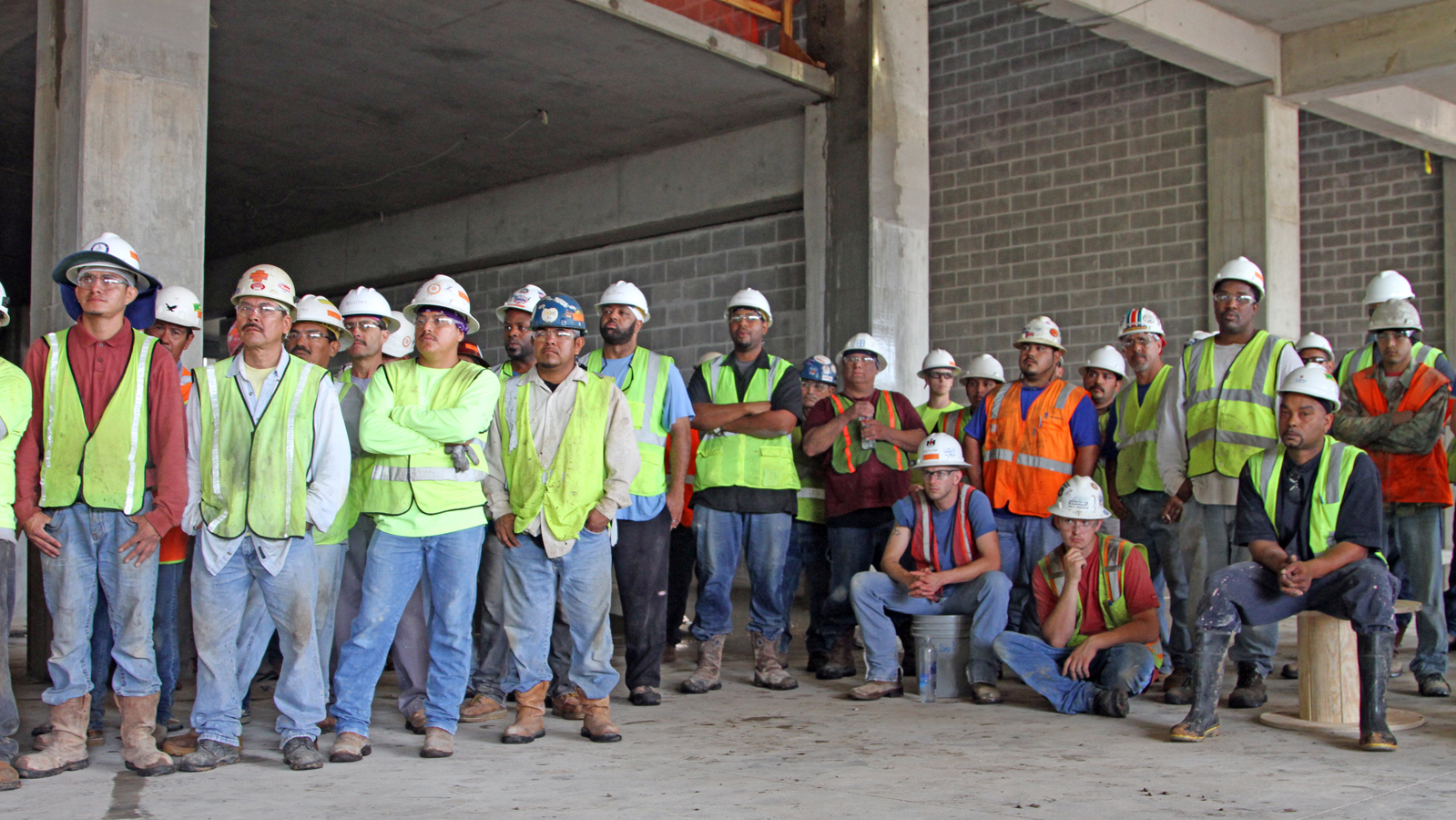
Archive photo of the 2013 Houston AGC safety stand-down. Source: Construction Citizen. Workforce context, not a depiction of 2026 hiring conditions. Image source ↗
AGC’s October 20 analysis of federal employment data found year-over-year construction job growth in 34 states and Washington, D.C., while only 25 states added jobs from August to September. Texas gained 15,000 jobs over the year but lost 2,400 in the latest month; California recorded declines over both periods.
The field takeaway is to build staffing plans around the actual market and trade. State payroll totals do not measure available electricians, qualified operators or foremen near your job. Confirm subcontractor crew commitments, supervision and travel arrangements before assuming that slower statewide hiring makes labor readily available.
Location: United States, with Texas and California comparisons. Organizations: Associated General Contractors of America; underlying federal labor data.
Why it matters: Conflicting annual and monthly signals make broad hiring assumptions unreliable.
Regional labor planning needs more detail than a national headline
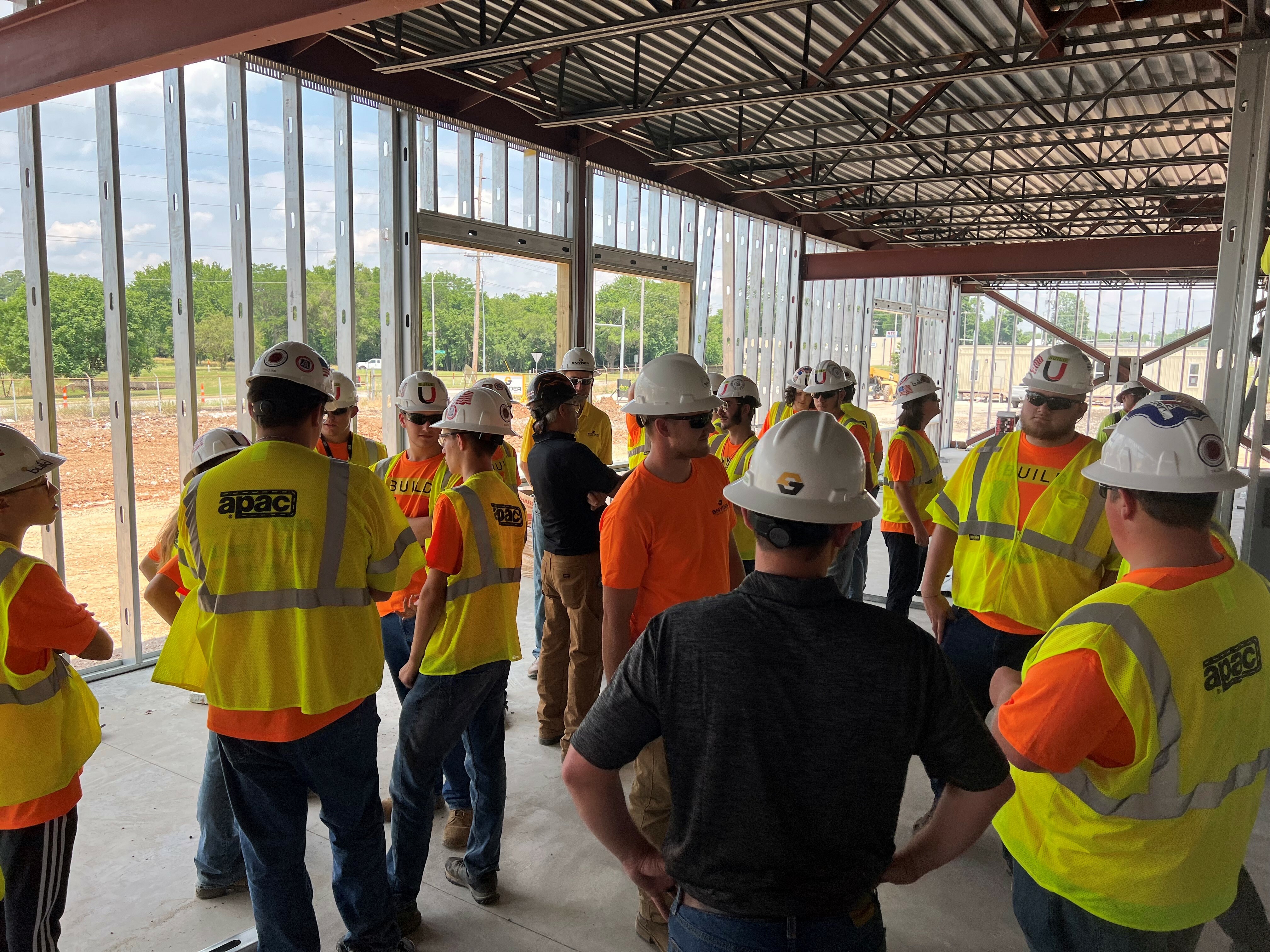
Build U workforce-development site visit in Southwest Missouri. Source: Snyder Construction Group. Context for training and local crew development. Image source ↗
The split between annual growth and monthly hiring in AGC’s new state analysis supports a cautious staffing approach. Over the next one to five years, field leaders should maintain trade-by-trade staffing forecasts and develop replacement foremen before major phases start. This is an operating recommendation, not a forecast that any state’s current growth rate will continue.
Why it matters: Confirm craft commitments and develop replacement foremen before major phases begin.
Southern Nevada workforce connections — past event
Career-exploration context: Build U participants in Southwest Missouri. Source: Snyder Construction Group. Not the October 23 Nevada event. Image source ↗
Southern Nevada workforce connections: The Nevada Contractors Association’s event page scheduled Construction Career Day for October 23 at the College of Southern Nevada’s North Las Vegas campus, with the State Contractors Board and Clark County School District among the partners. Contractors can contact the organizers about future recruitment involvement. The event date has passed; attendance, outcomes and future openings were not verified.
Why it matters: Contact organizers about future recruitment involvement; no future opening or event outcome is verified.
Listed solicitation — November 12 opening remains on the official listing. Advertisement, current addenda, submission time and qualifications remain unverified.
Desert Well equipping and Desert Wells 26 — listed solicitation
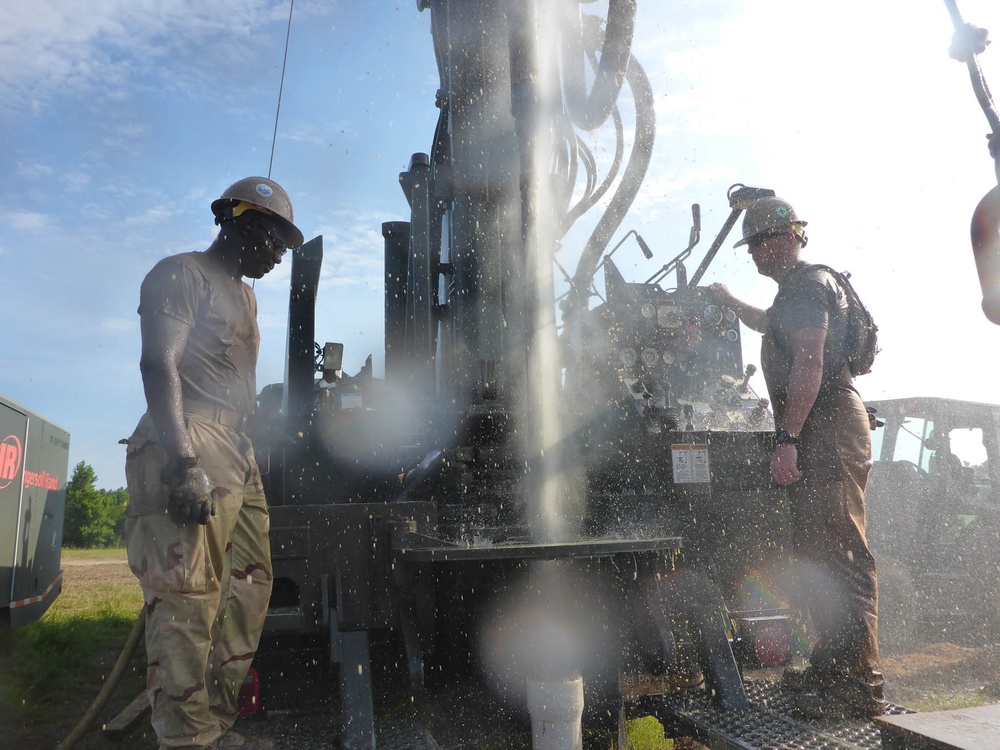
Well-drilling training at Camp Shelby, Mississippi. Source: U.S. Navy / DVIDS. Context only; not the Mesa well project. Image source ↗
- Location / owner: Mesa, Arizona; City of Mesa. - Project numbers: CP0836WE11 and CP0836WE12. - Status / deadline: The official city opportunities page lists a November 12, 2026 bid opening. Its posting date is not supplied, so this is an active lead checked during research, not a verified new announcement this week. - Value / contractor / construction dates: Not verified. - Potential opportunities: Well equipment and associated installation; exact trade scope must come from the advertisement and plans. - Action: Obtain the bid documents and all addenda directly from the city. The linked advertisement could not be retrieved during research, so submission time, qualifications and detailed scope remain unverified.
Location: Mesa, Arizona; City of Mesa Event date: 2026-11-12
Why it matters: Obtain the advertisement and current addenda before making a bid decision.
Make the next person’s work easier. AI-generated editorial illustration.
Use a simple release line:
Area / activity / remaining constraint / responsible person / release date
A concrete example:
North drainage run / excavation / access approval pending / project manager / Thursday noon
Keep unreleased work visible and assign a ready alternative before the crew arrives.
This is Sooport’s editorial field practice, informed by the permitting and sequencing issues above. It is not a new regulatory requirement.
Why it matters: Record the responsible person and needed decision date before committing a crew.
08 / ONE THING TO THINK ABOUT
Hoover Dam: check what the quantity includes
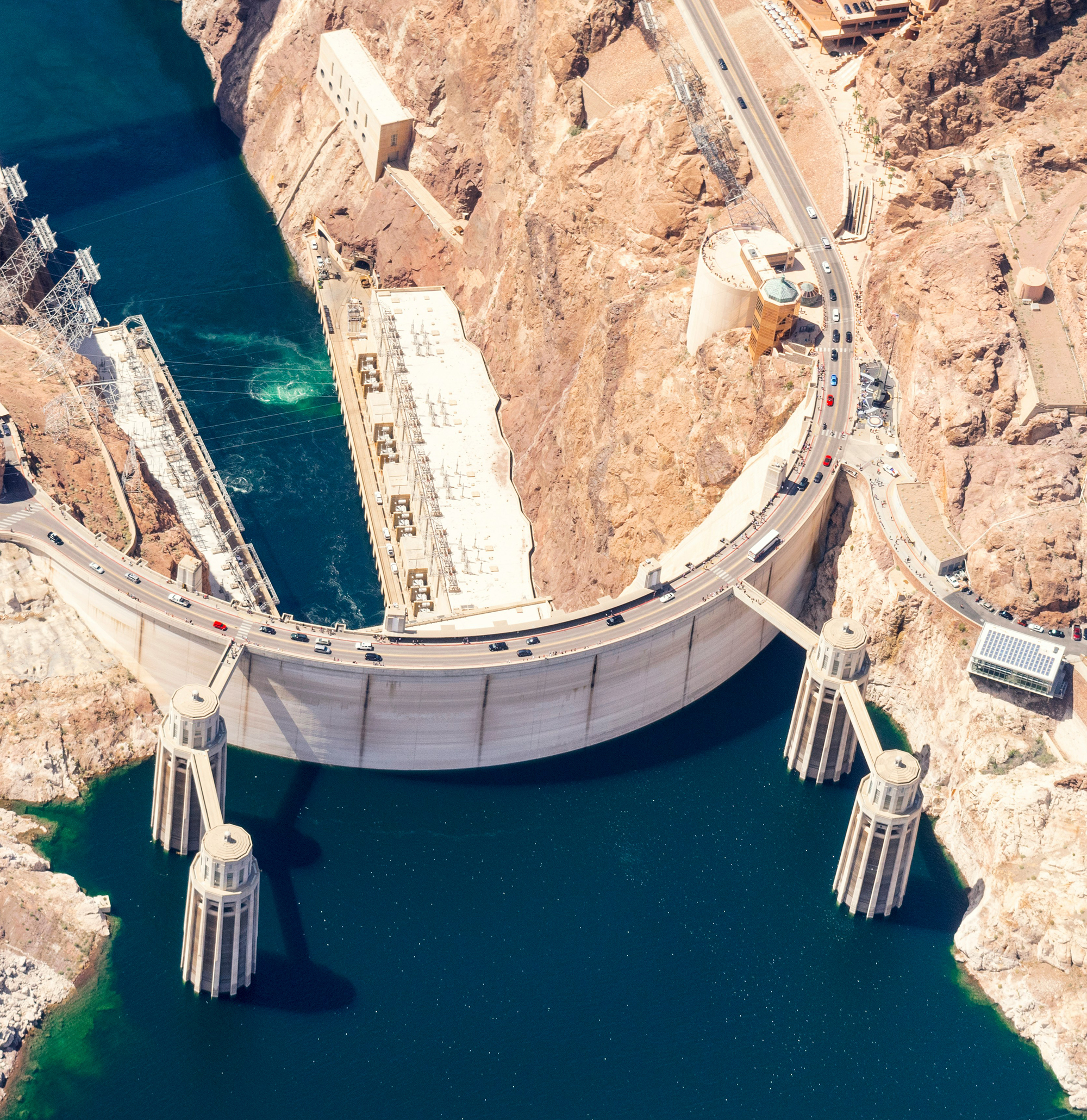
Hoover Dam and Lake Mead. Photo: Cedric Dhaenens / Unsplash, via ASCE. Historical-project context. Image source ↗
Hoover Dam contains 3.25 million cubic yards of concrete in the dam itself. Include its associated works and the Bureau of Reclamation puts the total at 4.4 million cubic yards—a useful reminder to check exactly what a project quantity includes.
Why it matters: The dam and its associated works have different concrete totals. Historical background, not breaking news.
Bring one useful item from this edition into your next planning meeting. Visit Sooport.com for more construction field-leadership resources and subscribe for the next weekly briefing.